
You know that sinking feeling when your garage door shudders, groans, or comes down just a little crooked, but still manages to close. It is easy to hit the remote again and hope it sorts itself out. After all, the door is still moving, so how bad can it be?
For many Kalamazoo homeowners, the garage door is the heaviest moving object on the property, often weighing well over 150 pounds. When the balance and alignment are off, that weight is no longer under proper control, even if the opener can still drag the door up and down. Small changes in how the door moves, sounds, or sits against the floor are usually the first clues that the system is out of tune.
At Fawley Overhead Door, Inc., we have been working on garage doors in Kalamazoo, Portage, and the surrounding communities since 1981. After thousands of doors, we see the same pattern again and again, noisy or crooked doors that turn out to have predictable balance or alignment problems, not bad luck or a “weak” opener. In this guide, we will break down what is really going on, how to spot issues early, and when it is time to bring in a trained technician before a minor nuisance becomes a major repair.
What Garage Door Balance & Alignment Really Mean
When we talk about garage door balance, we are talking about the relationship between the weight of the door and the force stored in the springs. A properly balanced door can be lifted by hand after the opener is disconnected and will stay roughly in place when you stop halfway. It should not shoot up on its own and it should not come crashing down. The springs are doing the heavy lifting, and your arm or the opener only guides the door.
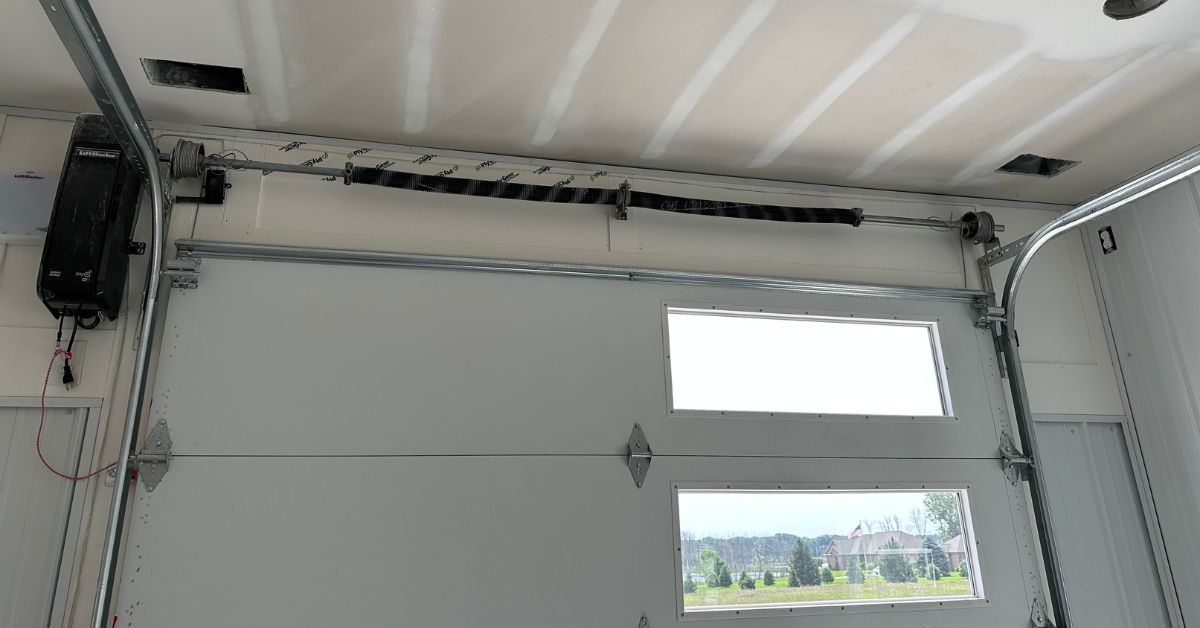
Most residential doors in Kalamazoo use either torsion springs mounted on a bar above the door opening or extension springs that run along the tracks. In both cases, the springs are wound or stretched so they carry almost all of the door’s weight. Cables connect the bottom of the door to drums or pulleys at the springs, creating a counterbalance system. When the balance is correct, the door feels surprisingly light for its size and moves smoothly with very little effort.
Alignment is about the path the door follows as it moves. The vertical and horizontal tracks need to be plumb, level, and parallel to each other so every roller carries its share of the load and the door glides evenly. When the alignment is right, you see even gaps on both sides and across the top, and the bottom of the door meets the floor in a straight line. If any part of that geometry is off, the door can rub, bind, or twist, even if the springs are balanced.
Because balance and alignment are so critical to safe operation, we build these checks into every job through our Certified Fawley Process. During installations, repairs, and maintenance visits, our technicians do not just swap parts, they test how the door behaves by hand, verify that the tracks are set correctly to the opening, and only then set the opener to match a door that is already moving properly.
How Garage Doors Lose Balance Over Time
Springs do not suddenly “decide” to go out of balance. They wear down gradually, cycle after cycle. Every time your garage door opens and closes, the torsion or extension springs wind and unwind. Over thousands of cycles, the steel fatigues and loses some of its strength. The spring can still work, but it no longer carries quite as much of the door’s weight, so the balance begins to drift. That is when the door starts to feel heavier if you lift it by hand.
Heavier doors, such as insulated steel or wood doors that are common around Kalamazoo, put even more demand on the springs. If the door was not set up with the correct springs from day one, the system may be marginal from the start. Frequent daily use, such as multiple drivers going in and out at different times, burns through spring cycles faster. Over time, what used to be a well-balanced door becomes a door that will not stay up halfway or that wants to slam shut if you let go.
Cables also stretch and wear. Even a small amount of stretch can shift how the weight is distributed from side to side. In a typical Michigan winter, temperature swings cause metal components to expand and contract, and humid summers can affect wood doors. In older homes around Kalamazoo, we sometimes see doors that were balanced correctly when installed, but shifting framing, settling concrete, and seasonal movement have changed how the system behaves.
After more than 40 years in Southwest Michigan, we can usually tell how hard a spring has worked by how the door feels when we lift it and by where it wants to sit on its own. That experience helps us spot balance issues before they turn into a broken spring or an opener that has been strained to the point of failure.
Why Track Alignment Matters More Than Most Homeowners Think
Many homeowners look at the tracks on the sides of the door and assume they are just rails for the rollers to ride in. In reality, those tracks are structural guides that need to be set in a very specific relationship to the door opening, wall, and ceiling. The vertical tracks have to be plumb, the horizontal tracks have to be level, and together they need to be parallel so the door does not twist as it moves.
If the tracks are bumped by a vehicle, storage item, or ladder, they can move slightly out of plumb or out of parallel. Fasteners can loosen from years of vibration, or from being anchored into drywall instead of solid framing. In some Kalamazoo garages, we see framing that has shifted just enough that the opening is no longer square. The door may still fit, but the tracks and rollers now have to work harder to guide it, and the door can start to rub on one side or leave a larger gap on one edge.
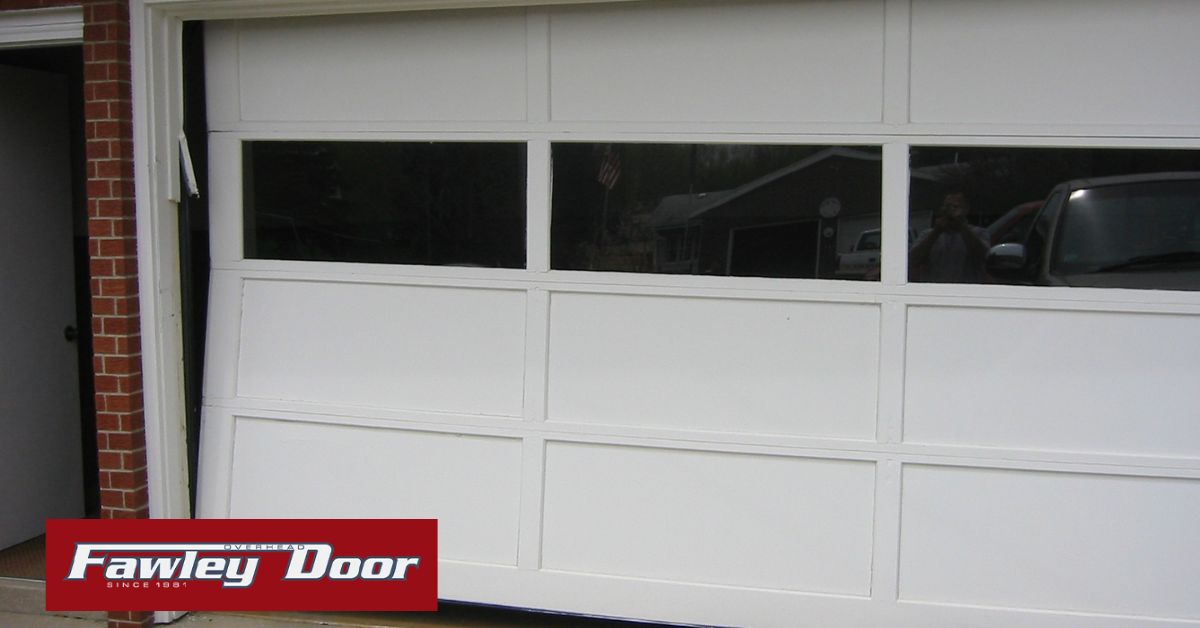
Misalignment creates side loading on the rollers and hinges. Instead of the door rolling straight up and down, it is pulled into the track on one side and away from it on the other. That increases friction and can cause the door to pause or jerk at the same spot every time it moves. In more severe cases, a roller can climb out of the track, or a bracket can be pulled away from the wall, leaving the door partially off track. At that point, operating the door is not just inconvenient, it can be unsafe.
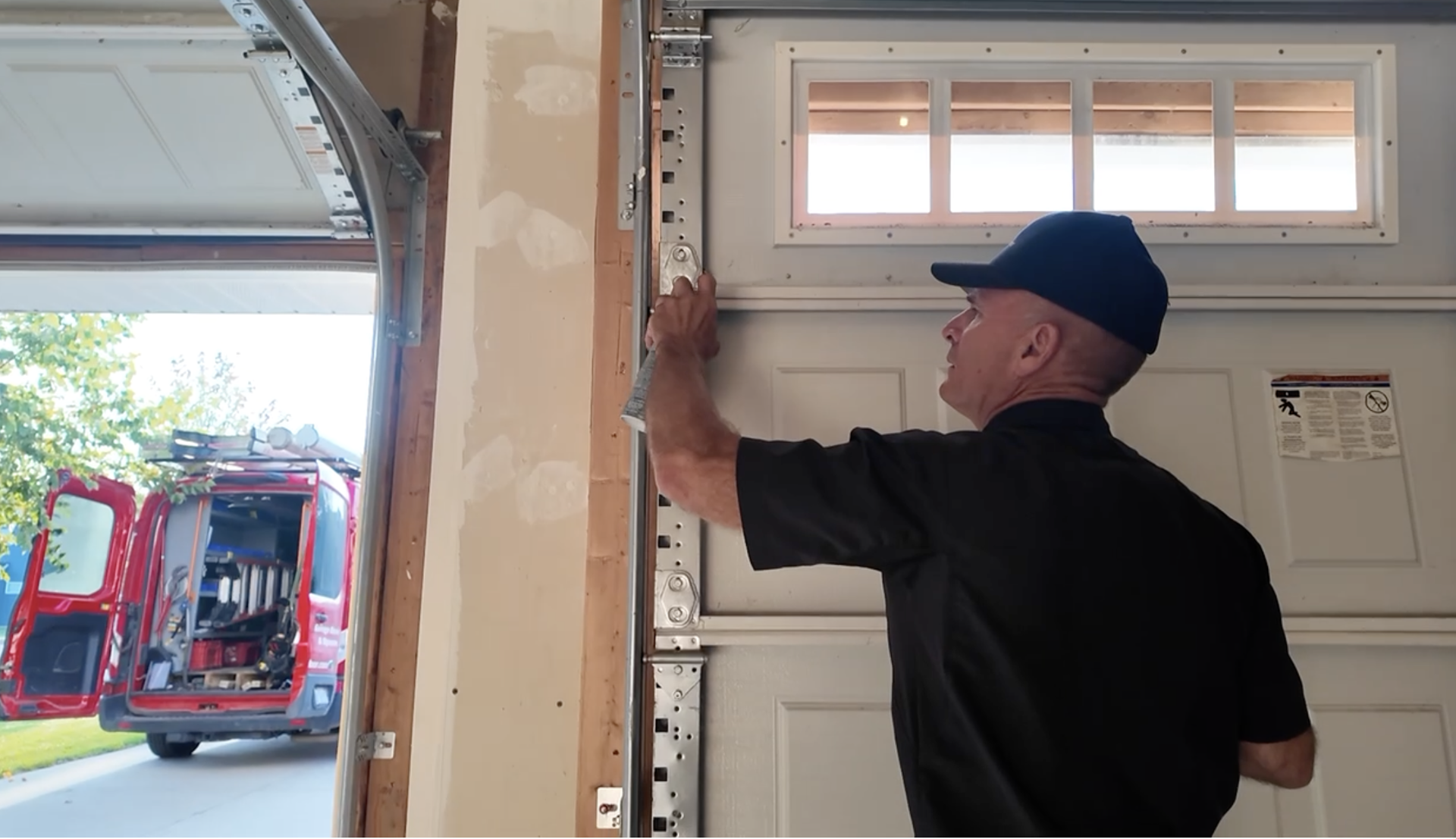
During installations and major repairs, our technicians in Kalamazoo do not just “eyeball” the tracks. As part of the Certified Fawley Process, we set the tracks carefully, tighten them into proper framing, cycle the door by hand to feel for smooth travel, and make fine adjustments so the door is moving in an easy, repeatable path. When customers mention new rubbing or uneven gaps during our follow-up calls, track alignment is one of the first things we revisit on site.
Common Warning Signs Your Door Is Out of Balance or Alignment
Balance and alignment issues with a garage door rarely appear all at once. Instead, they usually develop gradually, showing up through small changes in how the door moves, sounds, or sits within the opening. Many homeowners first notice that the door simply does not behave the way it used to. Paying attention to these early clues can help identify a developing problem before it leads to larger mechanical failures or unnecessary strain on the opener.
Common warning signs that a door may be out of balance or alignment include:
- Door will not stay in place when lifted manually: After disconnecting the opener, a properly balanced door should remain near the position where you leave it. If it drifts downward, rises on its own, or feels unusually heavy, the springs may no longer be counterbalancing the door correctly.
- Door slams shut or shoots upward: Rapid or uncontrolled movement when the door is released is a strong indicator that the balance of the spring system is off.
- Frequent stopping or reversing during operation: A door that pauses or reverses even when nothing blocks the opening may be encountering resistance from alignment problems or uneven weight distribution.
- Unusual noises from the opener or tracks: Buzzing, grinding, or straining sounds can occur when the opener is forced to work harder than it should because the door is not moving smoothly.
- Jerking or shaking during travel: Sudden shudders, especially where the door transitions between vertical and horizontal track sections, often point to misaligned components.
- Uneven contact with the floor: If one corner of the door touches the ground while the other leaves a visible gap, the system may be out of level or improperly aligned.
- Visible track or hardware issues: Bent tracks, frayed cables, loose brackets, or rollers that ride unevenly in the tracks can all signal alignment problems.
When these warning signs appear, the issue is often more than simple wear and tear. A door that is out of balance or alignment forces the opener and other components to work harder than intended, which can lead to additional damage over time. Addressing the underlying problem early helps restore smoother operation, reduce strain on the system, and keep the entire door assembly functioning safely and reliably.
Safe At-Home Checks vs. Dangerous DIY Fixes
Homeowners can perform a few basic checks to get a better idea of whether a garage door is balanced and aligned properly. These simple observations can help identify early warning signs without putting anyone at risk. The key is to focus on safe visual inspections and light testing rather than attempting to adjust or repair components that are under high tension.
Safe checks you can perform at home include:
- Basic balance test: With the door closed, pull the emergency release cord to disconnect the opener. Lift the door manually to about waist or chest height and release it carefully. A balanced door should stay near that position or move only slightly. If it drops quickly, rises on its own, or feels extremely heavy, the system may be out of balance.
- Track inspection: Look along both tracks for bends, dents, or sections that appear out of place. Even small distortions can affect how smoothly the door moves.
- Hardware check: Examine visible bolts, brackets, and mounting points along the tracks to see if anything appears loose or pulling away from the wall framing.
- Cable condition: Observe the cables running along each side of the door. Fraying strands or cables that appear misaligned on the drum may indicate developing issues.
- Roller position: Watch the rollers as the door moves. They should stay centered within the tracks rather than climbing onto the edges or binding in one section.
While these checks can provide useful information, certain repairs should never be attempted without proper training and tools. Garage door springs and torsion systems are designed to hold significant tension so the door can be lifted safely. Trying to adjust springs, loosen torsion hardware, or shift track positions while the system is under load can lead to serious injury or major damage to the door.
During a professional maintenance visit from Fawley Overhead Door, Inc., technicians perform the same balance checks but also make precise spring and track adjustments when needed. They lubricate key moving parts, inspect cables and rollers closely, and confirm that the opener settings match a properly balanced door. This approach helps the entire system operate more smoothly while reducing unnecessary stress on the opener and other components.
How Poor Balance & Alignment Cost You More Over Time
An unbalanced or misaligned garage door is not just a minor annoyance, it quietly drives up your repair costs and shortens the life of your equipment. When the springs are not carrying their share of the load, the opener has to pull more real weight every time the door moves. Motors run hotter, internal gears or belts work harder, and safety systems may trip more often because the door is struggling. Over months or years, that extra strain often leads to a seized motor, stripped gear set, or failed drive system.
The same thing happens with misaligned tracks. Extra friction at one or two spots puts concentrated wear on rollers and hinges. You may see rollers developing flat spots or hinges starting to crack around the screw holes. Cables under uneven tension can jump off their drums or pulleys, leaving the door crooked or stuck. In some cases, a mounting bracket can tear away from the wall or ceiling when the opener keeps pulling against a binding door. Each of these failures can lead to emergency service and more expensive parts.
On top of repair costs, there is the inconvenience and risk. A door that fails in the open position during a Kalamazoo winter storm can leave your home exposed to cold, snow, and security concerns. A door that slams unexpectedly can damage vehicles or belongings, or give someone a real scare. Many same-day emergency calls we handle start with owners mentioning that the door had been noisy or “off” for a while, but they put off calling because it still worked.
By addressing balance and alignment problems early, you give your opener, springs, and hardware a chance to reach closer to their expected service life. You also reduce the odds of being stuck with a door that will not open when you are trying to leave for work or will not close when you are heading to bed. At Fawley Overhead Door, Inc., we offer same-day emergency service in Southwest Michigan for situations where things have already gone wrong, and we also provide routine maintenance to catch these issues before they reach that point.
Why Professional Garage Door Service Matters
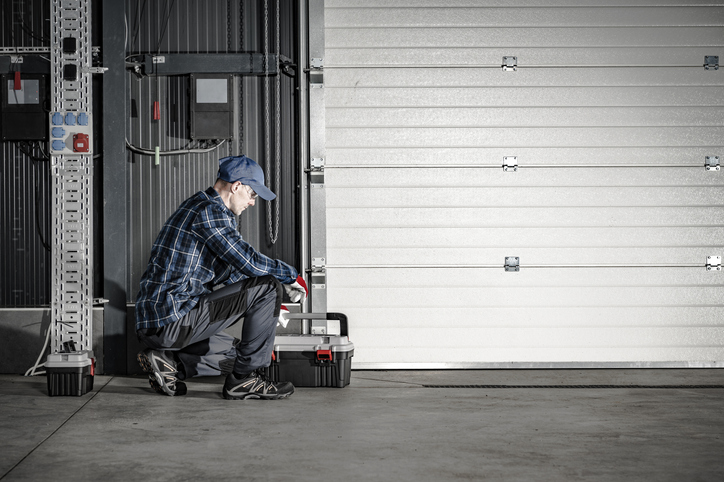
Correcting balance and alignment is not guesswork, it is a systematic process. A trained technician starts by disconnecting the opener and moving the door by hand, feeling for heavy spots, jerks, or binding. They then inspect the springs, cables, rollers, hinges, and tracks, checking that the hardware matches the door size and that everything is mounted securely into proper framing. Adjustments to spring tension, track position, and opener force and travel are made in a specific order so the whole system works together.
In Kalamazoo, many homes have attached garages that are used as primary entrances. That makes a reliable, safe door even more important. Our winters and freeze-thaw cycles can change how smoothly doors meet the floor, and local construction styles mean some garages have limited headroom or unique framing. These details affect how springs are chosen, how tracks are set, and how openers are installed. A one-size-fits-all approach can leave doors out of balance or misaligned from the start.
Through The Certified Fawley Process, we walk customers through consultation, ordering, scheduling, installation, and ongoing support in a consistent way. During installation or major repair, our technicians size and set springs correctly, square and align the tracks to the opening, and tune the opener to a door that is already moving smoothly by hand. After the job, we follow up to confirm everything is working the way it should and to address any new noises or changes that customers notice in the first days of use.
For new doors, we back our work with a lifetime product warranty, partnering with trusted manufacturers such as CHI, Clopay, Raynor, Amarr, and Wayne Dalton. For service and repairs, homeowners across Southwest Michigan have left more than 2,400 five star Google reviews, often mentioning prompt arrivals, clear explanations, and problems fixed right the first time. That track record, built since 1981, is why many Kalamazoo and Portage families call Fawley Overhead Door, Inc. every time something feels “off” with their garage door.
Keep Your Kalamazoo Garage Door Safe, Smooth, & Reliable
A garage door that still moves is not always a healthy system. When balance and alignment start to slip, you see it in small ways first, heavier lifting by hand, a crooked gap at the floor, a new grinding noise, or a door that hesitates and reverses. Understanding what those signs mean gives you the chance to address the problem while it is still a simple adjustment rather than waiting for a spring to break or an opener to fail at a very inconvenient time.
If any of the warning signs in this guide sound familiar, the safest next step is to have a trained technician perform a full balance and alignment check. At Fawley Overhead Door, Inc., we have been tuning and repairing garage doors in Kalamazoo and Portage for more than four decades, and our Certified Fawley Process is built to keep your door moving safely for the long term. For routine maintenance, repairs, or to talk about replacing an older door with a new, properly balanced system, you can reach our team today.